Three preprints put guardrails around AI robot failures | Robotics and AI
What really changed in the last 24 hours: three preprints test how to anticipate failed contact, choose better visual evidence, and evaluate humanoid motion with more useful data.
- robot learning
- VLA
- safety
- humanoids
- manipulation
- news
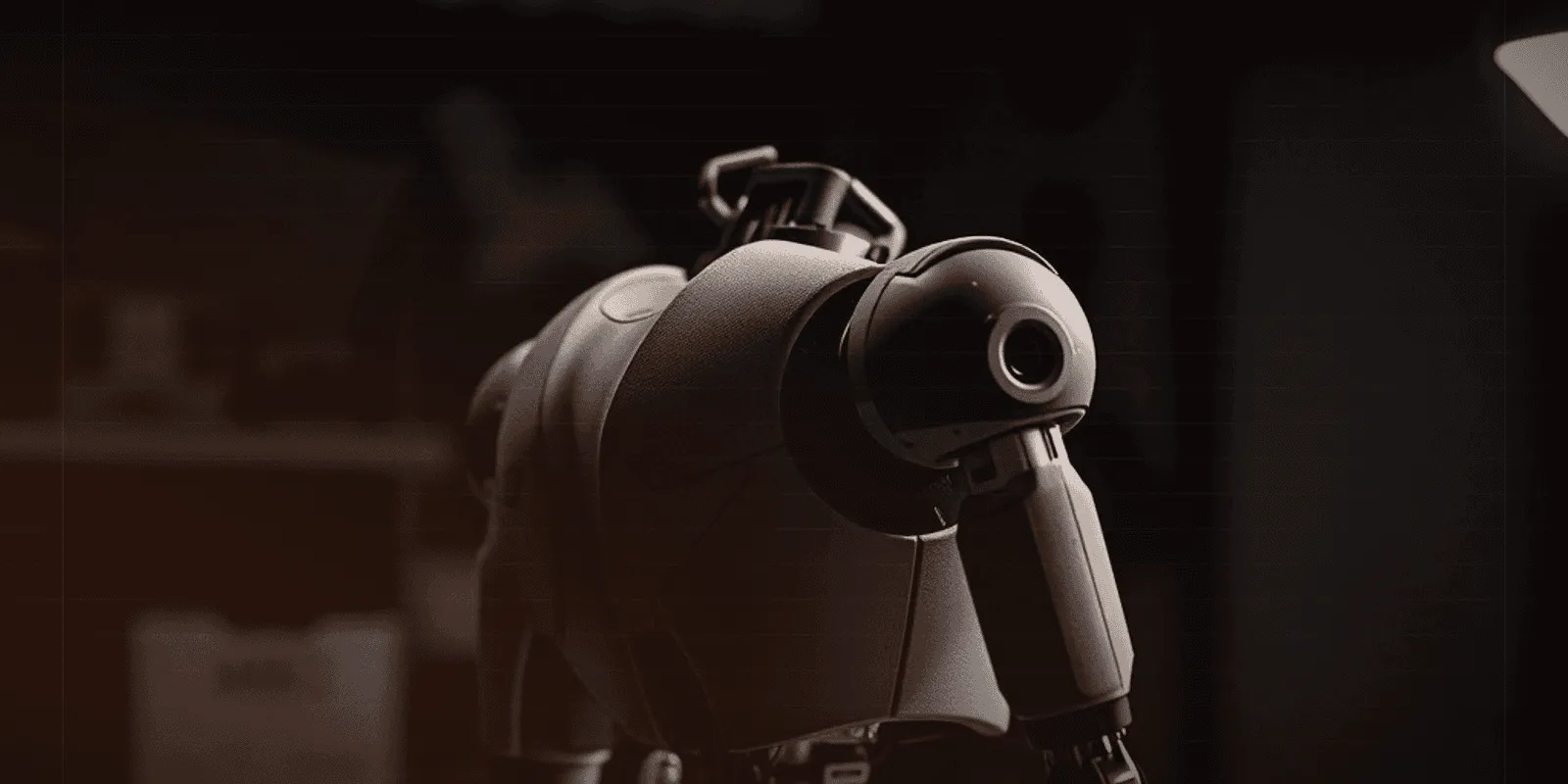
What really changed in the last 24 hours? Three research papers tackled a less flashy problem than teaching a robot a new skill: spotting when it is about to do the wrong thing. ContactGuard tries to abort before failed contact, Seeker learns where to look, and HumanTracker measures whether a humanoid keeps its balance and places its feet correctly.
These are preprints. They are not ready-to-install products, and their results still need independent validation. The useful signal is a shift in priority: a policy is not very useful if it cannot monitor its own failures.
ContactGuard tries to stop before impact
ContactGuard predicts what may happen after the next action chunk of a manipulation policy in a latent visual space. If the prediction points to failure, the system can abort before the gripper pushes, misses the grasp, or moves the object.
The authors train it from unlabelled robot trajectories plus a small set of labelled clips. They also report transfer to a real robot without changing the policy that runs the task. This is a wrapper around the model, not proof that the robot understands physics.
For a home project, the idea scales down well: record the last frames before every contact, define what a failed attempt looks like, and stop the motion when the camera sees that trajectory. You do not need to start with a huge world model. You need a safe stop that works.
Seeker learns where to look
Seeker uses the action a robot is trying to perform to learn which image region deserves attention. Instead of always cropping around the gripper, it adjusts the region of interest to the task and its progress.
In its tests, the paper reports an increase in average real-robot success from 48.3% to 76.7%. Under lighting and background shifts, it rises from 20.0% to 60.0%. These are preprint results, not a universal comparison across robots, cameras, and tasks.
The practical lesson is simple. A higher-resolution camera cannot fix a policy that looks in the wrong place. Before buying another sensor, check which part of the image your controller actually uses and whether it stops looking at the object when the task changes.
HumanTracker measures the motion that matters
HumanTracker introduces a humanoid motion-tracking benchmark with about 153 hours of optical motion trajectories. It also proposes HumanScore, a metric trained on 12,000 motion pairs to catch failures that average joint error can hide, such as foot skating or mistimed support.
This does not make a humanoid walk better. It does something more basic and necessary: it helps show when an animation looks correct in numbers but fails at the contact points that matter. The paper also says it was accepted to ECCV 2026, but it remains a preprint in this publication.
For a small test bench, you can copy the principle without collecting 153 hours of motion. Save video from every attempt, label supports and contacts, and do not reduce everything to average pose distance. If the foot slips, the robot has not learned even when the chart looks good.
What did not ship today
I found no new board, sensor, or actuator with enough documentation to recommend in this window. I also found no verified ROS 2 or LeRobot release, and no industrial deployment with concrete data. Today’s material is research on observability and safety, not new hardware.
If you are starting out, do not make a large VLA your first project. Build one short task, add a stop before contact, and inspect what the camera sees. Once that loop is reliable, these papers give you better questions for measuring the next step.
- ContactGuard: Pre-Contact Execution Monitoring with Action-Conditioned Latent World Models, arXiv, August 13, 2026
- Attention from Action, for Action: Emergent Visual Bottlenecks for Policy Learning, arXiv, August 13, 2026
- HumanTracker: Towards Comprehensive and Human-Aligned Motion Tracking Benchmark, arXiv, August 13, 2026
Every claim above comes from here. If something has no source, it's not in.